
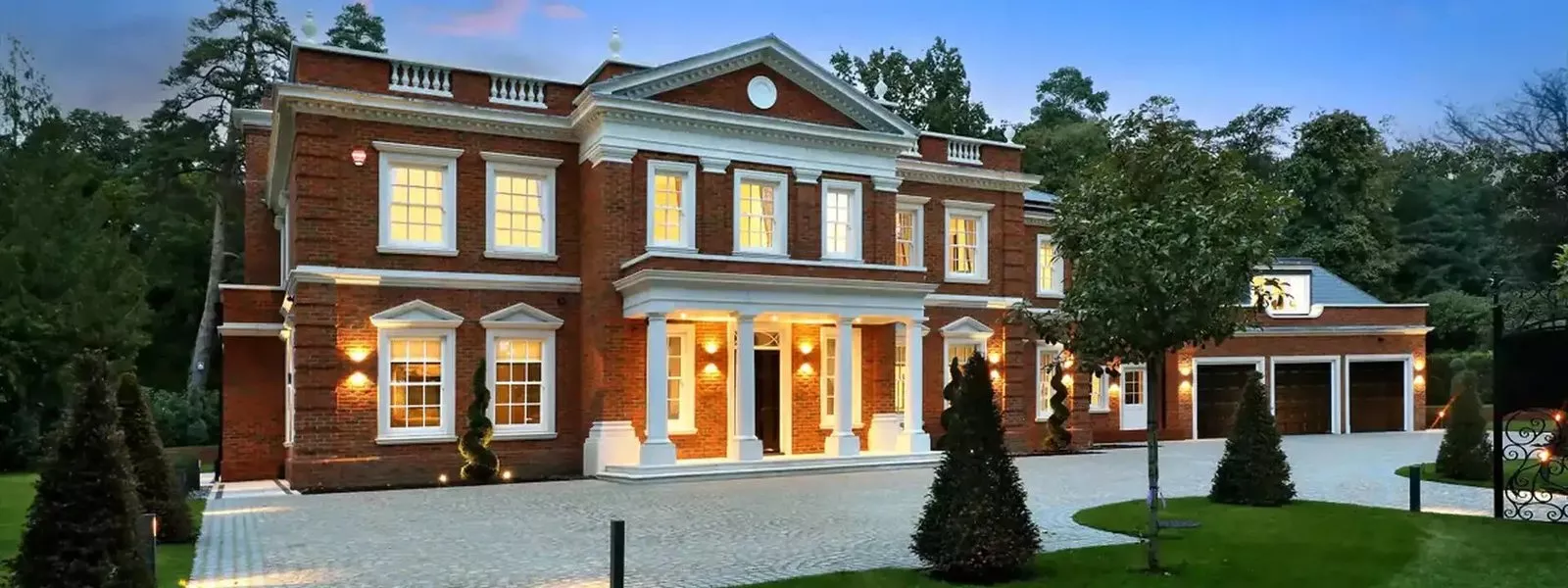
A gate intercom on a London self build has to be planned around two things: what your front boundary is allowed to be, and how the cables cross a drive that will be paved early. Settle the gate type and height with your planning drawings, then lay ducts for power and data to the pier before the paving goes down, and the motors and gate intercom can be fitted at the end without lifting anything. On a tight London plot there is rarely a second chance to dig.
This guide is for people building a new house in London, whether that is a replacement dwelling on a suburban road, a house on a backland plot reached by a shared drive or a new home behind a period front wall. It covers the boundary rules, the choice of gate, what goes in the ground and the piers, and how the intercom reaches the house.
Front boundaries, gate height and planning
A new house will have its own planning permission, and the front boundary is often shown on the approved drawings or covered by a condition, so check those first and build to them. Changing the boundary later is a separate question. The Town and Country Planning (General Permitted Development) (England) Order 2015, Schedule 2, Part 2, Class A allows gates, walls and fences without a planning application only within limits: generally no more than 1 metre high next to a road used by vehicles and no more than 2 metres elsewhere, and not within the curtilage of a listed building.
For many London front gardens that 1 metre limit is the deciding factor, because the gate sits right on the pavement edge. If you want a taller gate, it belongs on the planning drawings from the start. Your architect or the council will confirm what applies to your plot, including any conservation area controls or conditions that remove permitted development rights.
Sliding or swing gates on a tight plot
Swing gates need room inside the boundary for the leaves to open, which a short London drive may not have once a car is parked on it. A sliding gate needs a clear run along the inside of the wall instead, roughly the width of the opening, for the leaf to travel. Either way, the motor sits in a different place, and the ducts must end exactly where the gate supplier says it will go. Decide this before groundworks and mark it on the drawings.
What to lay before the drive is paved
| Duct or cable | Route | Purpose |
|---|---|---|
| Mains power duct | House to the main gate pier | Supply for the gate motors and pier lighting |
| Separate data duct | House to the same pier | Cat6 for the gate intercom and any entrance camera, kept apart from the mains |
| Crossing duct | Under the drive between the piers | Links the far side motor and the safety photocells |
| Motor ducts | Pier to each motor, or to the sliding gate base | So the gate installer connects without disturbing the paving |
| Draw cords and a measured photo | Every duct | Quick cable pulls later, and no guesswork once it is covered |
A new circuit to the gate is notifiable electrical work under Part P of the Building Regulations, so it must be done by an electrician registered with a competent person scheme or signed off by building control. Our first fix wiring guide for London self builds covers the comms cabinet these cables go back to.
The pier and the gate intercom panel
While the piers are being built, ask for a recessed back box for the gate intercom on the side visitors approach, set at a height a driver can reach from a car window, plus a conduit up the core of the pier from the duct entry. Add a position for a keypad or fob reader if the family will use the pedestrian gate, and an isolator near the motor controller so the gate can be made safe for servicing. A panel flush in the brickwork looks much better on a London street than a box fixed to the face.
Wiring the gate intercom back to the house
An IP video intercom can usually be powered and connected through one Cat6 cable from the network switch in the comms cabinet. From there a call can ring a touch screen in the kitchen, a panel by the front door and the phones of everyone at home, and one tap opens the pedestrian or vehicle gate. Our home automation page for London shows how the gates sit alongside the lighting, heating and cameras on one app, and a solid network matters here: our Wi-Fi installation page for London explains how we wire access points so the app works anywhere in the house.
If you add a camera at the entrance, angle it at your own drive and the visitor at the panel rather than the pavement and the road. Our security wiring guide for London self builds covers the alarm and camera cabling that shares the same cabinet.
Who does what
We design the entrance cabling, wire it, fit and programme the gate intercom and link it to the network and the smart home, and we give your electrician drawings and a cable schedule. The gate motors and their safety devices are supplied, set up and tested by the gate installer, who should hand over the paperwork for them. Our founder, Kieran McGuire, is an electrician, so the gate supply, the data cabling and the controls are planned together. Our survey and design service puts all of it on one set of drawings, and a design consultation is £360 plus VAT, with extra time at £90 an hour plus VAT. If a car charger will share the drive, our EV charger wiring guide shows how to use the same trench.
Questions we are often asked
Do I need planning permission for electric gates in London?
On a new build, follow your approved drawings and conditions. Adding or changing gates later is often permitted development up to 1 metre high beside a road used by vehicles, but listed buildings, conservation areas and conditions can change that, so check with the council.
Can I fit manual gates now and motorise them later?
Yes. Lay the ducts, the mains supply and the Cat6 to the piers now and choose gates and hinges that can take a motor, and the upgrade is simple later.
Does the gate intercom need its own power supply?
Usually not. Most IP intercoms are powered over the Cat6 from the network switch, so the only mains at the entrance is for the motors and lights.
Can I open the gate from my phone?
Yes, with an intercom that has an app. You can see and speak to a visitor and open the gate for a delivery from anywhere with an internet connection.
Is a wireless gate intercom good enough?
On a short drive it can work, but brick piers and walls weaken radio signals. A wired connection is more reliable and costs very little while the drive is still open.
Book a consultation or call our head office on 01344 937999 (London office 0208 064 0196).
- Log in to post comments