A Control4 rescue is how we take over a system that has stopped behaving: we survey it, trace every cable, rebuild what needs rebuilding and leave the whole thing documented. This Part 1 shows a large Control4 home as we found it, with a crowded rack, a struggling network and faults on the cameras, and the plan we are now working through.
We take over Control4 systems that other companies installed, across London and the Home Counties, and the photos below are typical of a system that has grown for years without a plan. The house is not named, and the job is still running: this page will grow when the racks are finished.
| Project | Control4 rescue, Part 1 |
|---|---|
| Type of work | Takeover of an existing system and a rack rebuild |
| Systems | Control4, the network, the cameras and the equipment racks |
| Status | Under way. Part 2, with the finished racks and network, will be added to this page. |
What the Control4 rescue started with
The brief from the owners was short and familiar. The racks were overflowing, the network kept giving trouble, some cameras were failing and nobody could say which cable did what. Every photo in this part was taken before the work was finished.
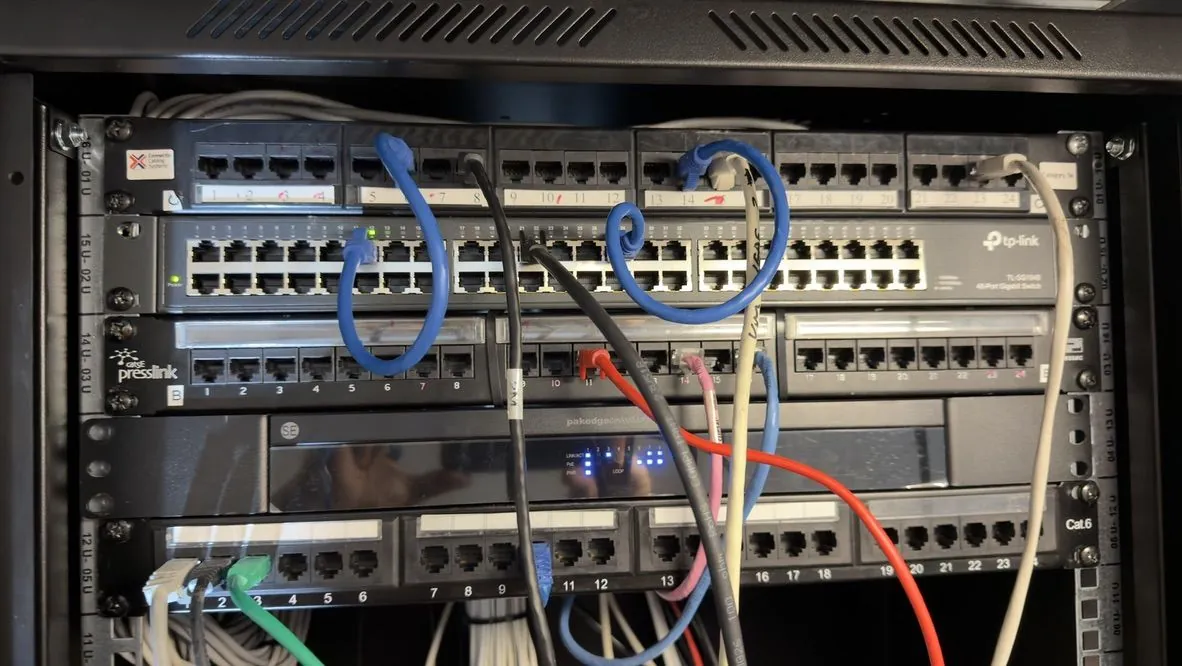
The front of the main rack. Blue patch leads were draped across the network switches rather than plugged neatly into their ports, power leads trailed down the front and more cable was piled on top. The Control4 CORE 5 controller sat in the middle of it, just under the switches. Behind the rack, white, grey and black cables were knotted together across a perforated shelf.
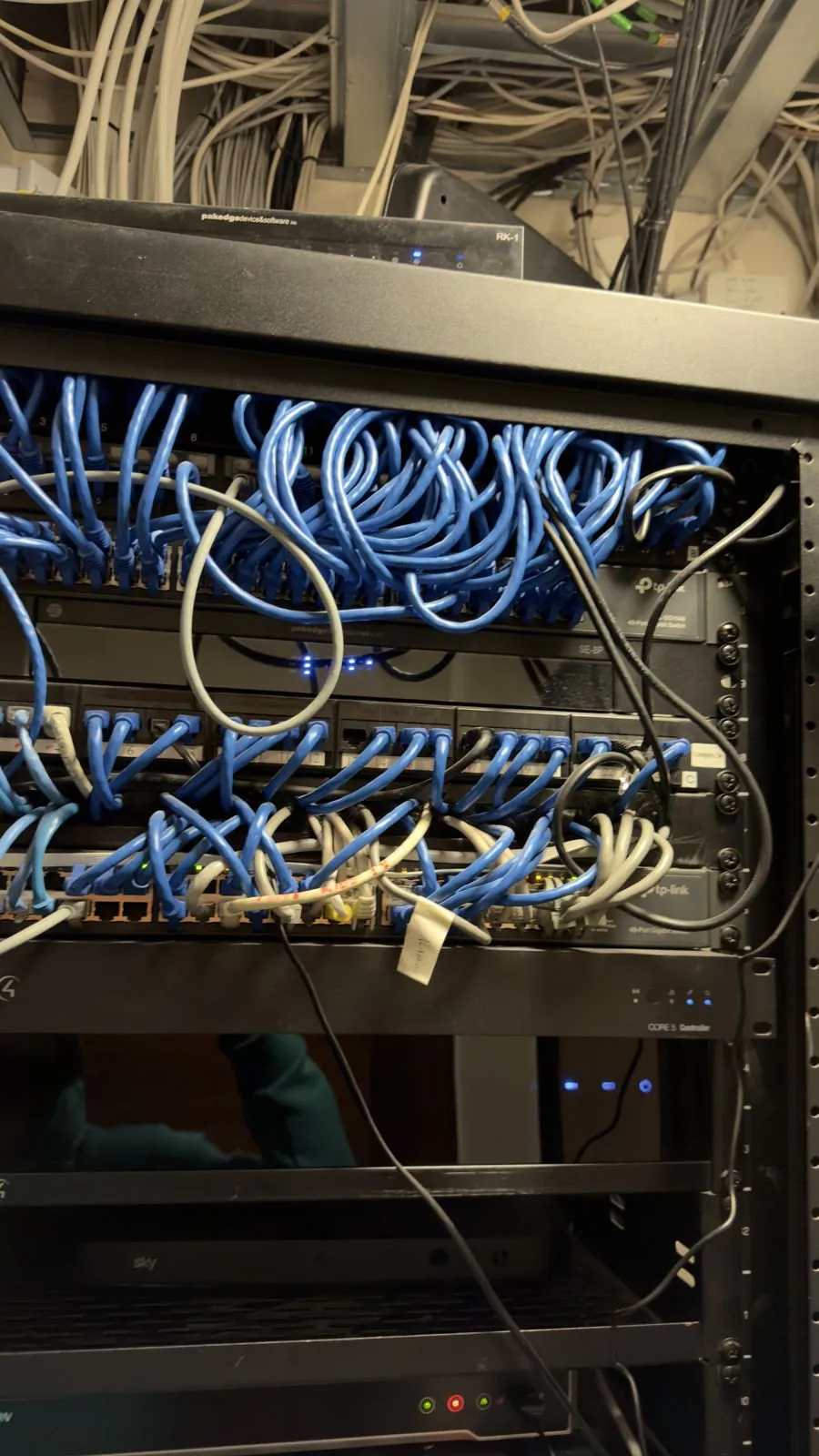
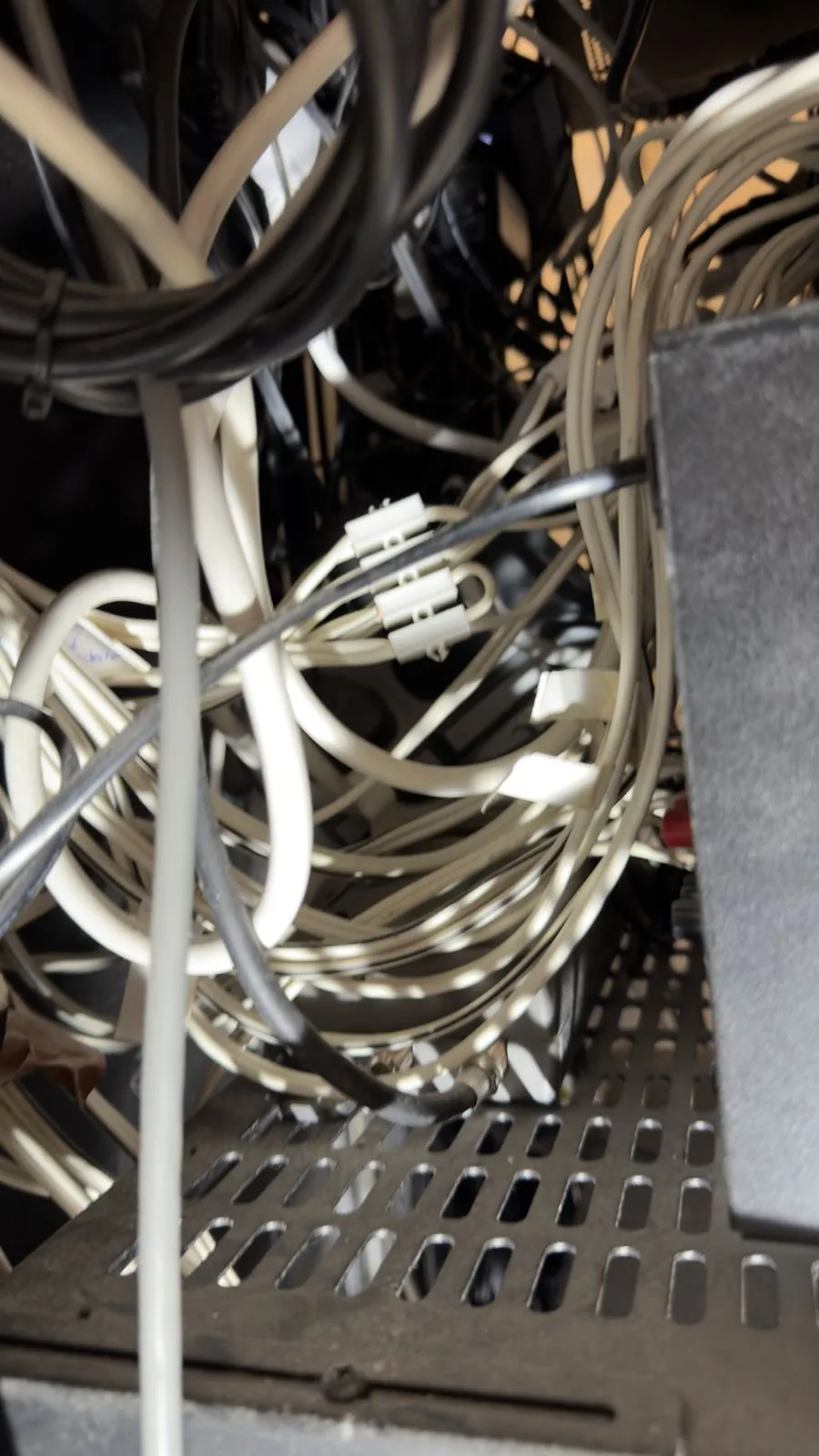
Left, the front of the rack as we found it; right, the cabling behind it.
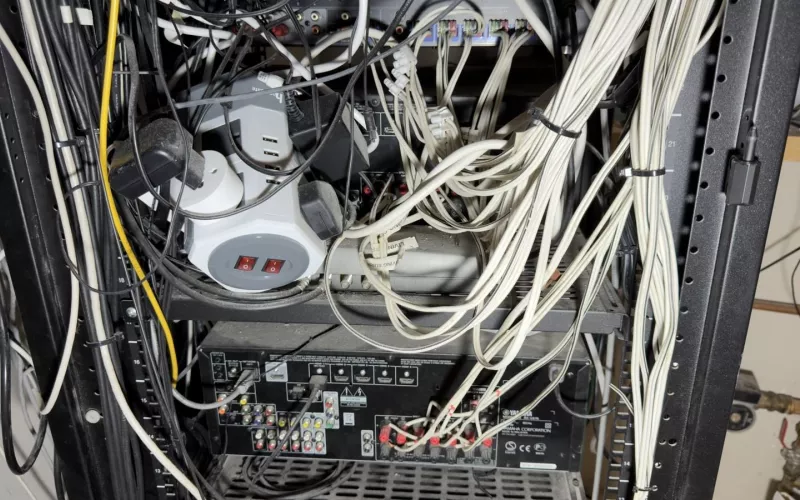
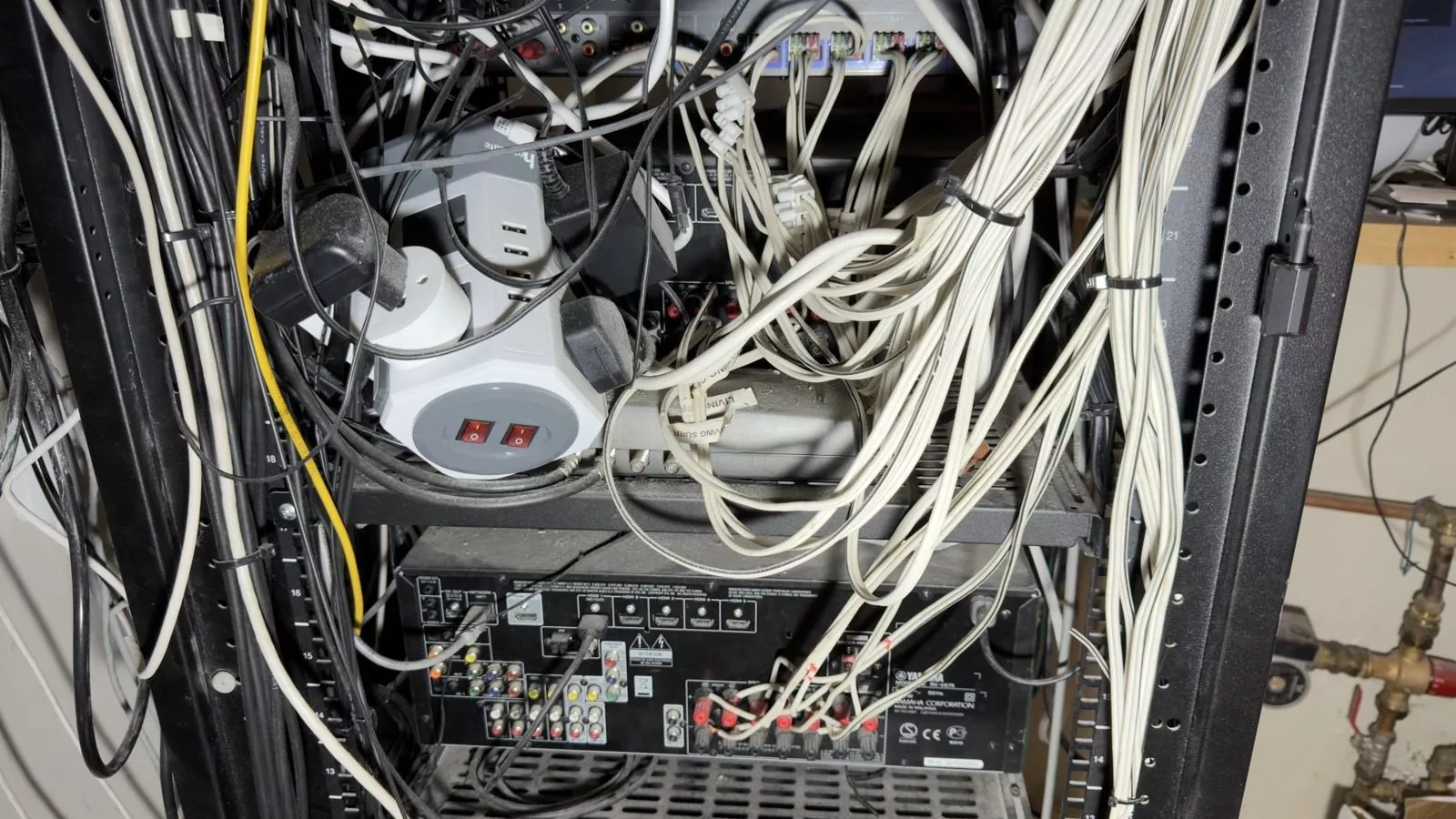
Power and the receiver. The photo at the top of the page is the back of the same installation. A stack of plug adaptors and a multi way power strip sit on a shelf above an AV receiver, and heavy bundles of white cable run down the side, some of them into the receiver's speaker outputs.
Why a rack like this goes wrong
Control4's CORE 5 data sheet describes the controller as a 1U, fan-less design with a heat-sink chassis and an integrated power supply, built for a simple, silent and reliable installation. That reliability assumes a rack where air can move and every lead goes somewhere on purpose. In a rack like this one, the trouble builds slowly:
- Heat. Leads draped across the front of equipment trap warm air around it, and equipment that runs hot ages faster and misbehaves.
- Intermittent faults. A lead under strain can lose contact for a second and then recover, so the problem appears and vanishes before anyone can see it.
- Guesswork. With nothing labelled, tracing a fault means unplugging leads one by one, and each one risks a new fault somewhere else.
- Unclear power. When adaptors and power strips are stacked on a shelf, nobody can tell quickly which device hangs off which supply.
That is why a fault reported as "the Control4 is playing up" often turns out to start in the network, the power or the cabling around the controller.
How the rescue runs, stage by stage
- Survey. Look at the Control4 system, the network and the cameras as they stand, before touching anything.
- Trace and label. Follow every cable to its end, test it and give it a label.
- Rebuild the racks. New patching, proper cable management and a planned power layout.
- Replace the network. A new network at the centre of the system, because everything else depends on it.
- Bring the cameras back. Get the camera system recording and viewable again.
- Test and record. Test Control4 room by room and write down what is where.
Our rescue projects page sets out how we assess a failing system before changing it, and our design and documentation examples show the kind of record a client is left with.
The rebuild so far
Two photos from part way through the job. In the first, patch panels and a 48 port switch have just a handful of leads connected. The second shows a wall cabinet half way through its rebuild: short white patch leads link the panels and switches, a rack power strip sits below them, long cables are tied in groups through a management bar, and a label printer waits at the bottom.
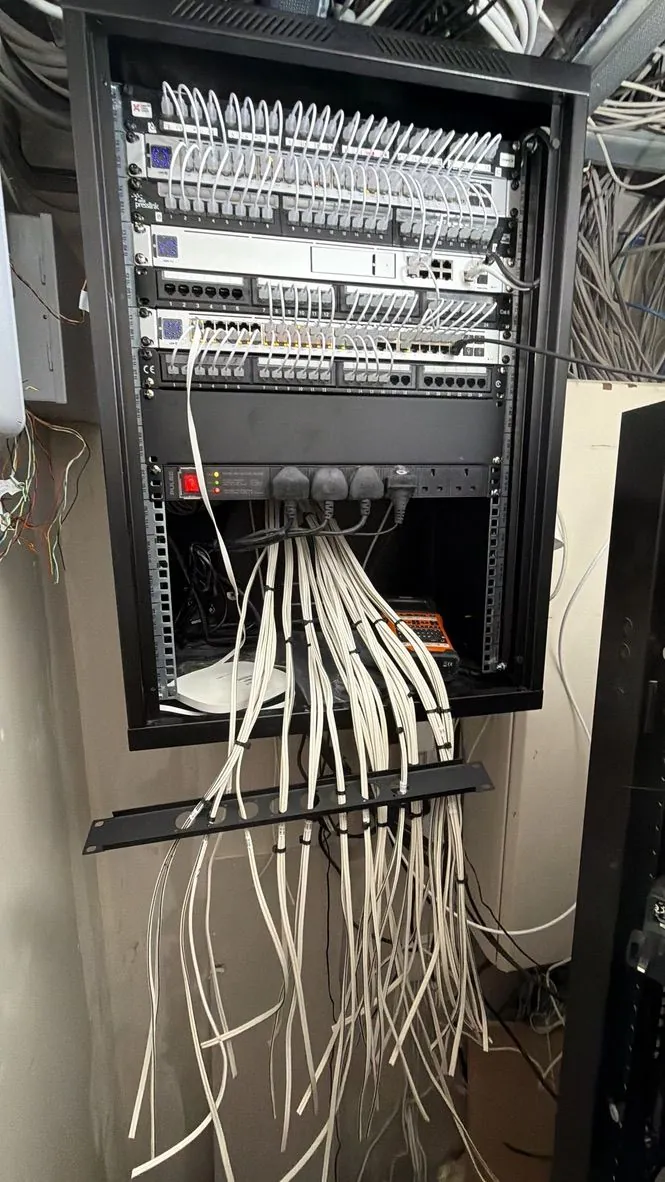
Labelling is part of the job, not an extra at the end.
Is your own system heading the same way?
- Problems that fix themselves. A light or a room that stops responding and then recovers usually points to a loose connection, a struggling network or a tired power supply.
- Cameras and speakers dropping off. Devices that keep disappearing from the network are a sign the network needs attention; our home Wi-Fi and network page shows how we design one.
- A rack nobody wants to open. If every engineer who visits sighs at the cupboard, the cabling needs work.
- No installer to call. Systems left without anyone looking after them collect small faults until they become big ones. Our Henley Control4 rescue shows the result of putting one right.
Questions we are often asked
Do you only work on Control4 systems you installed?
No. Most rescues are systems someone else put in. We are an accredited Control4 dealer, so we can survey any Control4 installation, tell you what is wrong and take it over.
Will the Control4 controller need replacing?
Not necessarily. The faults often start in the network, the power or the cabling around the controller, and putting those right can make the existing system dependable again. If the controller itself is the problem, the survey will say so.
What do I have at the end of a rescue?
A rack where every lead is labelled and routed, a network that is fit for the house, and a written record of what is installed and where, so any engineer can pick the system up.
How much does a Control4 rescue cost?
It depends on the size of the house and how far the system has drifted, so we price it after a survey. Engineer visits are £90 an hour plus VAT, with a minimum booking of four hours (£360 plus VAT).
Can you look after the system afterwards?
Yes. 1Install Care keeps a rescued system maintained, with most support done remotely, so it does not drift back to where it started.
See our Control4 installer page for London, or start with the survey and design step.
Book a consultation or call our head office on 01344 937999 (London office 0208 064 0196).
- Log in to post comments